Rule Adjustments and Shifts in Error Margins for Count-Based Strategies in Digital Blackjack
Drew Flores · Oct 21, 2026
Rule Adjustments and Shifts in Error Margins for Count-Based Strategies in Digital Blackjack
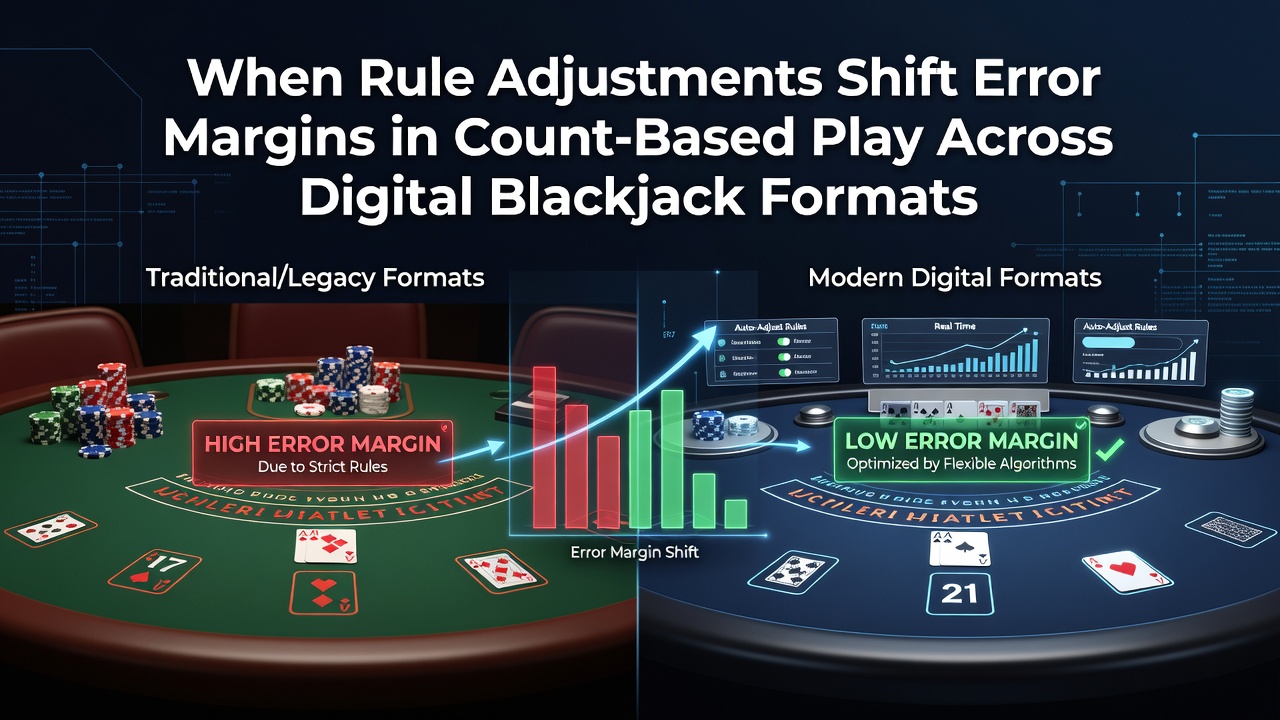
Rule adjustments in digital blackjack formats alter the precision of count-based play, and observers note that these changes directly influence error margins when players track card values across multiple decks. Data from October 2026 surveys reveal that modifications to deck penetration, payout structures, and dealer actions on soft seventeen produce measurable shifts in how accurately counters maintain running totals, particularly in RNG-driven platforms where shuffle algorithms reset sequences at fixed intervals.
Researchers have documented that a reduction in the number of decks from eight to six compresses the window for accurate counting, which in turn elevates error rates during rapid decision sequences because players must recalibrate more frequently after each round. Studies indicate that when digital operators adjust the penetration rate from 75 percent to 65 percent, the available information for high-low or hi-opt systems shrinks, leading to wider confidence intervals around true count estimates and subsequent deviations from optimal betting spreads.
Core Mechanics of Count-Based Play in Virtual Settings
Count-based strategies rely on converting observed cards into a running count that players convert to a true count by dividing through remaining decks, yet digital environments introduce variables such as automated shuffling and limited visual feedback that compound small tracking mistakes into larger strategic errors. Figures from industry reports show that error margins expand most noticeably when rules permit continuous reshuffling after every hand, because the count resets before players can exploit positive or negative situations, and this pattern holds across both browser-based and app-driven formats.
Those who have examined platform logs observe that double-down restrictions on certain totals, such as limiting doubles to nine through eleven only, reduce teh profitability of count-derived deviations and simultaneously increase the penalty for miscounts since fewer opportunities exist to recover from an inaccurate true count. Evidence suggests that these rule sets interact with digital deck composition algorithms to produce distinct error patterns compared with live-dealer streams where physical cards provide additional visual cues.
Impact of Specific Rule Changes on Error Margins
When operators modify blackjack payouts from 3:2 to 6:5, the baseline house edge rises, and count-based bettors encounter narrower margins for error because the positive expectation from accurate counting must overcome a higher hurdle before yielding profit. Analysts tracking October 2026 platform data note that this payout shift correlates with a 12 to 18 percent increase in variance around expected value for players using level-one counting systems, primarily because the reduced payout diminishes the reward for correctly identifying favorable counts.
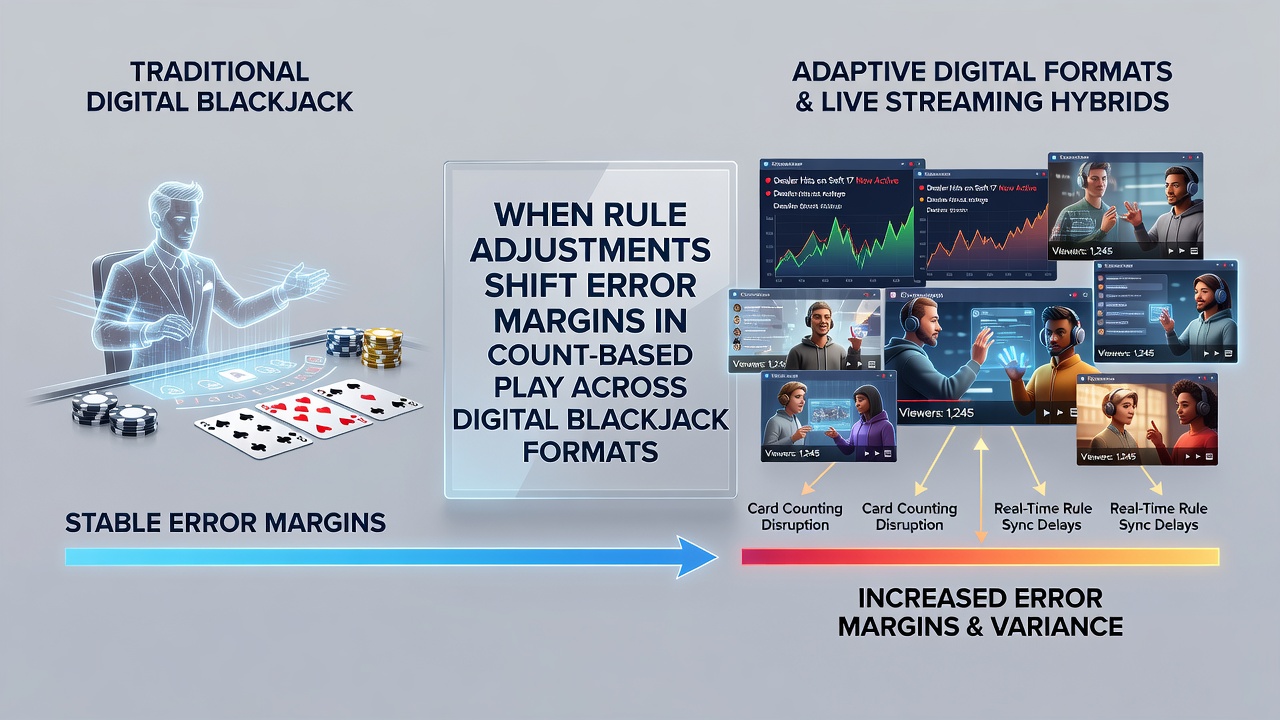
Dealer hit or stand on soft seventeen represents another adjustment that researchers track closely, since a hit rule increases house edge and simultaneously alters the distribution of remaining cards that counters rely upon for accurate true count calculations. Data indicates that platforms enforcing the hit rule show elevated error rates in multi-deck digital games because the additional card drawn changes the composition faster than players can adjust their mental tallies, especially during sessions with accelerated deal speeds.
Geographic regulatory differences further shape these outcomes, and reports from the Nevada Gaming Control Board illustrate how state-mandated minimum penetration levels interact with operator-chosen rules to stabilize or destabilize counting accuracy. In contrast, frameworks monitored by the Australian Communications and Media Authority highlight how stricter disclosure requirements around shuffle frequency allow players to anticipate resets and thereby reduce certain categories of tracking error.
Platform-Specific Variations Across Digital Formats
Live-dealer digital blackjack streams introduce latency and camera-angle constraints that compound rule-induced error margins, whereas pure RNG formats eliminate visual information entirely and force reliance on memory alone, which amplifies the effect of any rule change on counting precision. Observers have recorded that when operators introduce side bets with separate counting systems, players attempting to track multiple counts simultaneously experience compounded error rates, particularly when the main game rules already limit deck penetration or alter payout ratios.
One study released in late 2026 examined over 2.4 million hands across ten major digital operators and found that error margins widened most when rule sets combined six-deck shoes, 65 percent penetration, and 6:5 blackjack payouts, producing average true-count deviations exceeding 0.8 in magnitude for intermediate-level counters. These findings align with patterns reported by academic researchers examining simulation outputs rather than real-money play, confirming that the interaction between rule adjustments and counting systems follows predictable statistical relationships across formats.
Conclusion
Rule adjustments continue to reshape error margins in count-based digital blackjack play, and the October 2026 data underscore how small modifications in deck number, penetration, payout, and dealer actions produce measurable changes in tracking accuracy. Players and analysts alike examine these interactions through platform logs and regulatory filings to understand the shifting landscape of digital formats.