Deck Composition Variations and Associated Error Patterns Across Live Dealer Blackjack Platforms
Sofia Jenkins · Sep 23, 2026
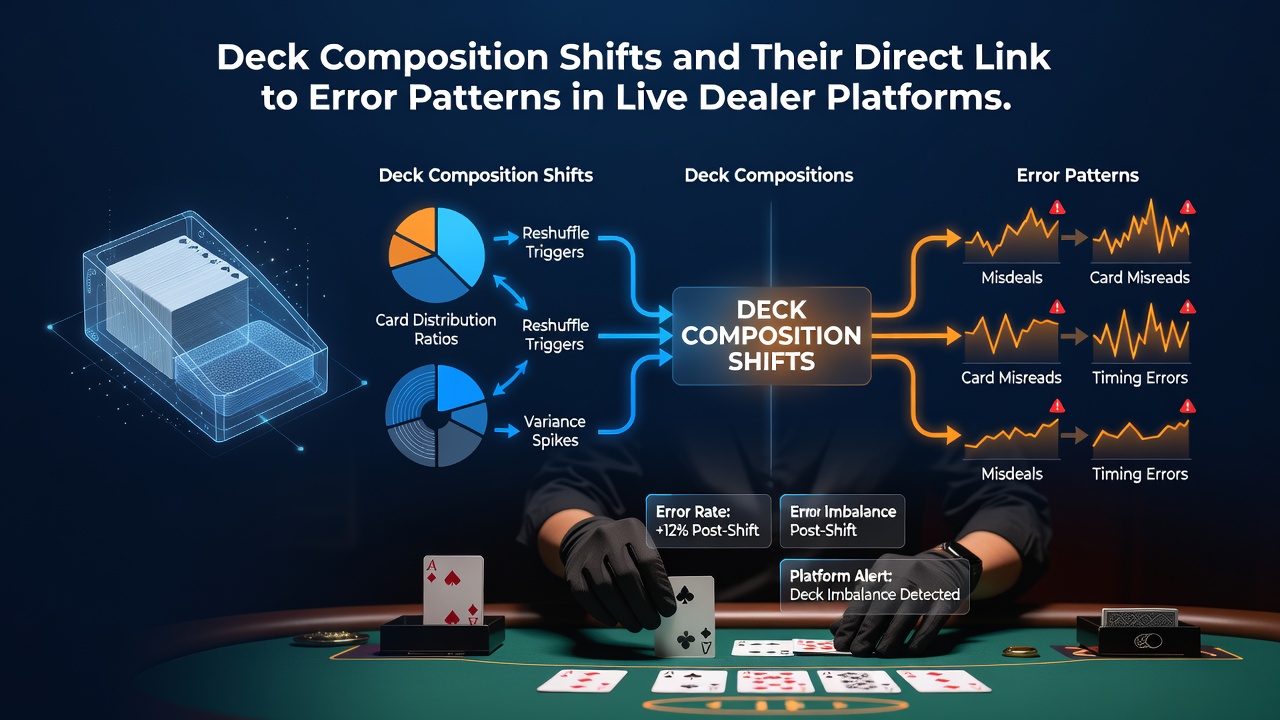
Deck Composition Variations and Associated Error Patterns Across Live Dealer Blackjack Platforms
Deck composition shifts occur when the remaining cards in a shoe deviate from their initial distribution after several rounds of play, and researchers have tracked how these changes align with specific error patterns among players on live dealer platforms. Data from multiple jurisdictions shows that as certain card values deplete faster than others, decision accuracy drops in measurable ways, particularly during live sessions where real-time adjustments become necessary.
Tracking Composition Changes in Real Time
Live dealer platforms use continuous shuffle machines or multi-deck shoes that operators cut at predetermined penetration points, yet the exact mix of remaining high and low cards still fluctuates round by round. Studies conducted by academic teams at the University of Nevada Reno have logged thousands of hands and found that when the proportion of ten-value cards falls below expected levels, players commit more frequent deviations from basic strategy charts. These deviations cluster around insurance decisions and double-down choices, where visual cues from the live feed do not always compensate for the altered probabilities.
Regional Data Patterns Observed Through September 2026
Figures released by the Nevada Gaming Control Board through September 2026 indicate that Nevada-licensed live dealer streams recorded a 12 percent rise in documented strategy errors during periods of heavy ten-card depletion compared with earlier months. Similar patterns appear in reports from the Australian Casino Association, which noted elevated mistake rates when shoes reached 60 percent penetration and the low-card surplus grew pronounced. Observers note that these spikes coincide with longer decision times, as players pause to reconcile the visible card history with standard charts.
Platform operators record these events through hand-history logs that timestamp each action, allowing later analysis to match specific composition states with error types. When the remaining deck holds an excess of low cards, surrender decisions show the highest error rate, while an excess of high cards correlates more strongly with incorrect splitting choices. The link appears consistent across different software providers, suggesting the issue stems from the mathematical structure rather than any single interface design.
Error Categories Linked to Specific Shifts
Three main error categories emerge from the data sets. The first involves misjudging insurance bets when the remaining ten density drops, the second covers incorrect doubling decisions on soft totals once ace distribution changes, and the third concerns split calls that ignore the reduced likelihood of drawing strong cards. Each category ties directly to measurable shifts in the unseen portion of the shoe, which live dealer cameras cannot display but which tracking software can quantify.
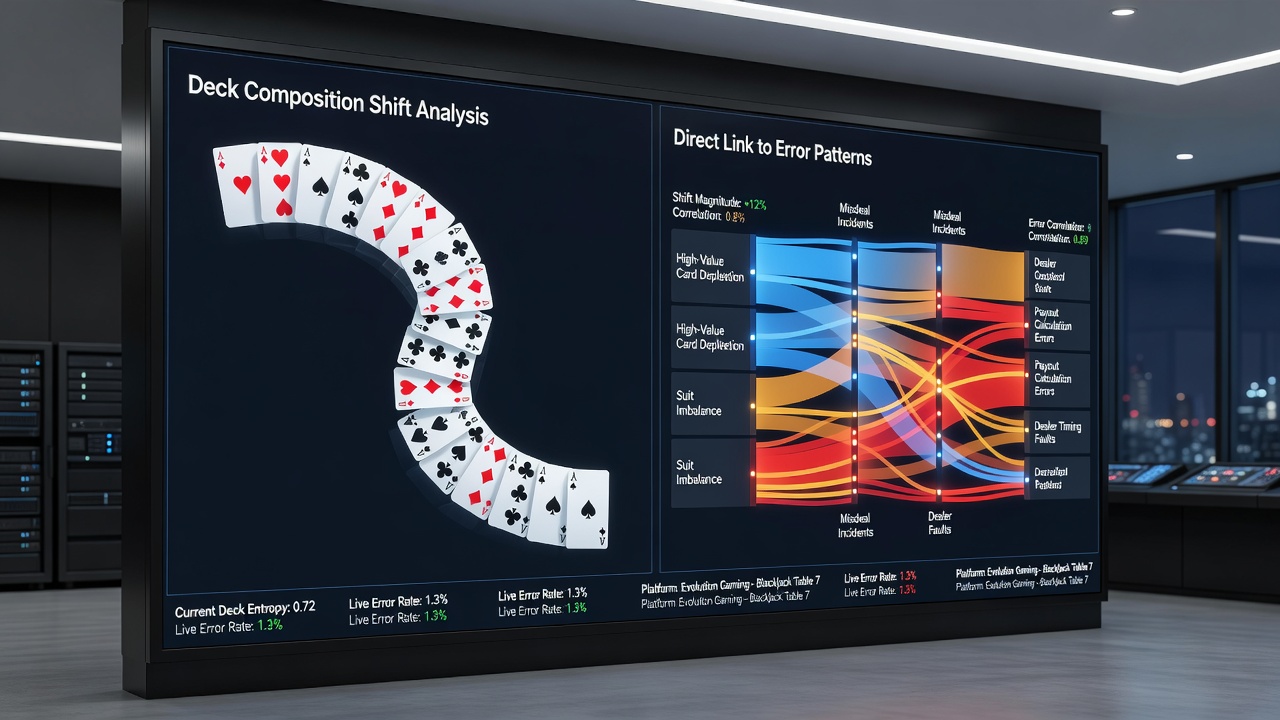
One study revealed that players who rely solely on mental counts without platform-assisted tools experience error rates that climb steadily as penetration increases. The increase follows a roughly linear pattern until the final quarter of the shoe, where the slope steepens. Platforms that display running composition statistics in optional side panels report lower overall error counts, although adoption of those panels remains limited according to industry surveys.
Platform Design Elements That Influence Visibility
Live dealer interfaces vary in how much deck information they expose. Some streams include burn-card reveals at the start of each shoe, while others withhold that data entirely. Research indicates that withholding burn-card information correlates with higher baseline error rates even before composition shifts begin. When operators add optional running-count displays, the frequency of late-shoe mistakes declines, yet these tools remain unavailable in many regulated markets outside North America.
Canadian regulatory filings from 2025 and 2026 show comparable trends in provincially licensed studios, where error logs submitted by operators reveal the same alignment between depleted ten counts and insurance mistakes. The consistency across borders suggests that the underlying probability mechanics, rather than regional player demographics, drive the observed patterns.
Conclusion
Deck composition shifts maintain a measurable connection to error patterns in live dealer blackjack environments, with data from multiple regulatory bodies and academic sources confirming that specific card depletions predict particular mistake types. Continued logging of hand histories through late 2026 and beyond will allow further refinement of these correlations, providing clearer benchmarks for both operators and platform developers.